

Saddle-stapled in photographic wraps.
16 pages
5.5” x 8.5 “
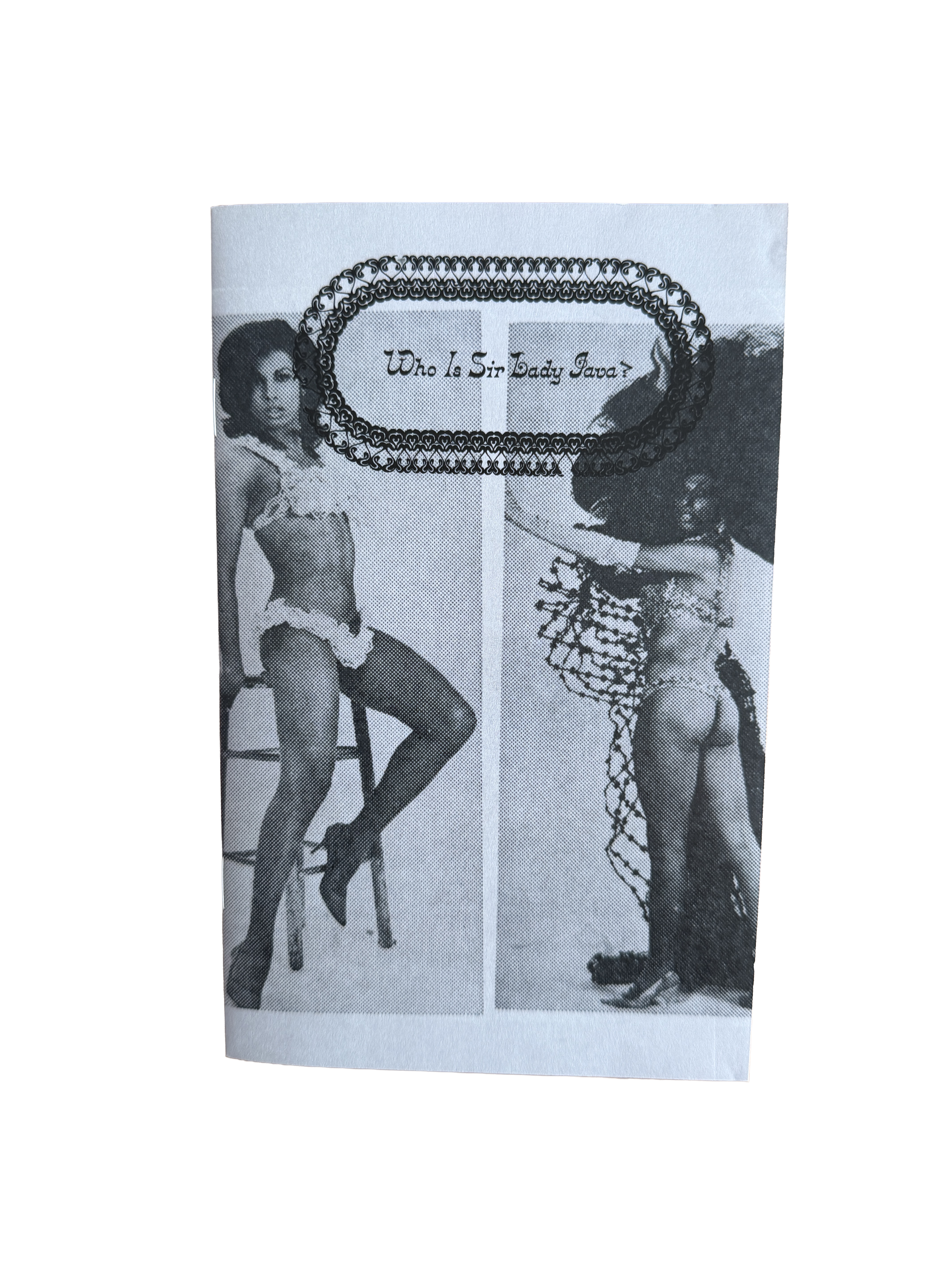
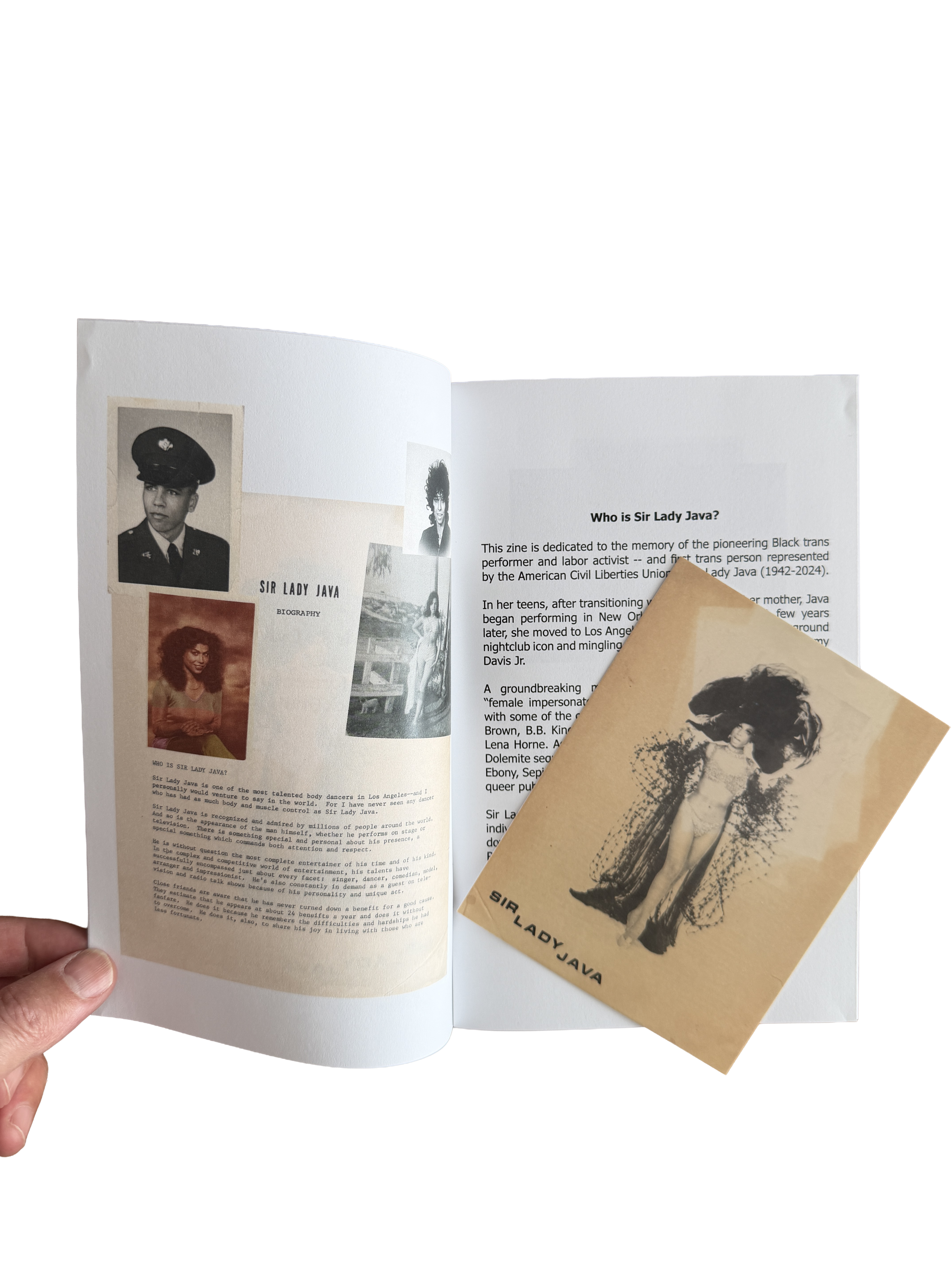
This zine is dedicated to the memory of the pioneering Black trans performer and labor activist — and the first transgender person represented by the ACLU — Sir Lady Java (1942–2024).
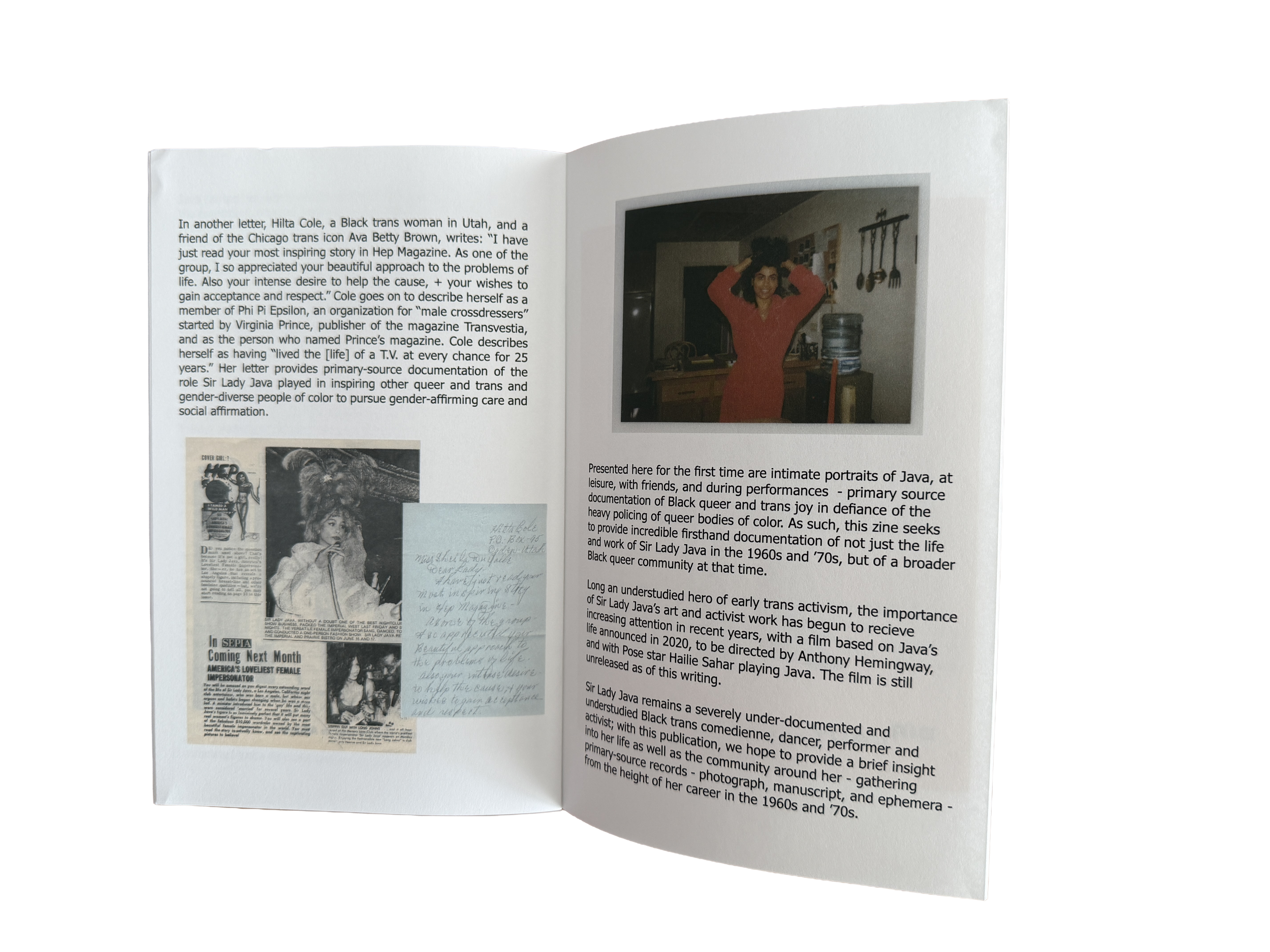
A nightclub star who emerged in New Orleans and rose to prominence in Los Angeles, Java became an underground icon, performing alongside and among figures like Redd Foxx, Sammy Davis Jr., James Brown, B.B. King, Quincy Jones, Ray Charles, and Lena Horne. A self-described “female impersonator” and a groundbreaking multidisciplinary dancer, she moved fluidly between performance, nightlife, and screen. She appeared as herself in the 1976 film The Human Tornado and was profiled in Jet, Ebony, Sepia, and early queer publications like the L.A. Advocate.
But her significance extends beyond the stage.
In 1967, after police shut down her act at Redd Foxx’s club under Rule 9—a regulation banning performers from “impersonating” the opposite sex—Java became the first transgender individual defended by the ACLU, challenging a system that sought to erase her presence altogether.
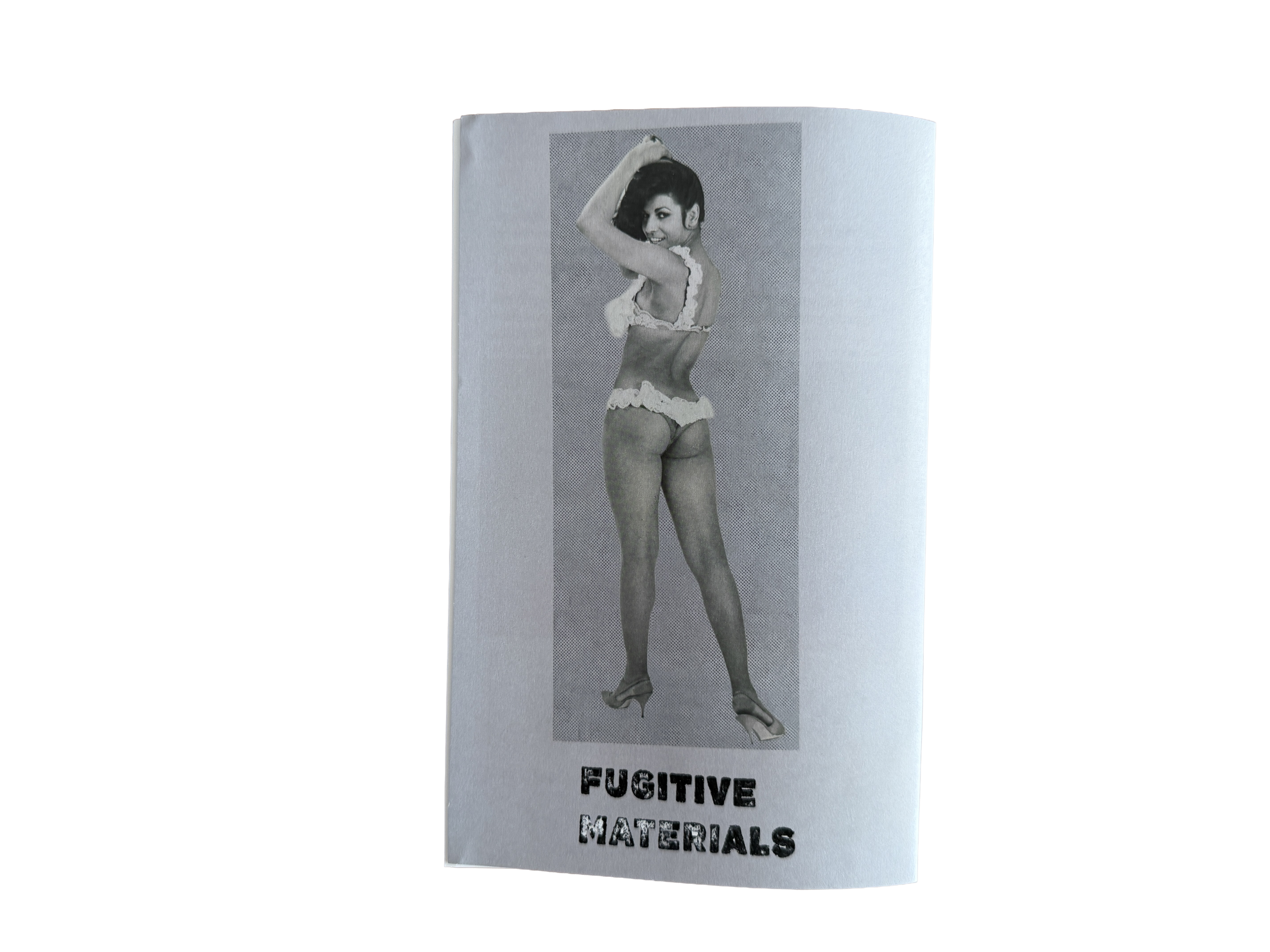
Who Is Sir Lady Java? draws from her archive to trace this life and legacy through images, ephemera, and the record of a figure who shaped both performance history and the fight for trans visibility.
Saddle-stapled in photographic wraps.
16 pages
5.5” x 8.5 “
This zine is dedicated to the memory of the pioneering Black trans performer and labor activist — and the first transgender person represented by the ACLU — Sir Lady Java (1942–2024).
A nightclub star who emerged in New Orleans and rose to prominence in Los Angeles, Java became an underground icon, performing alongside and among figures like Redd Foxx, Sammy Davis Jr., James Brown, B.B. King, Quincy Jones, Ray Charles, and Lena Horne. A self-described “female impersonator” and a groundbreaking multidisciplinary dancer, she moved fluidly between performance, nightlife, and screen. She appeared as herself in the 1976 film The Human Tornado and was profiled in Jet, Ebony, Sepia, and early queer publications like the L.A. Advocate.
But her significance extends beyond the stage.
In 1967, after police shut down her act at Redd Foxx’s club under Rule 9—a regulation banning performers from “impersonating” the opposite sex—Java became the first transgender individual defended by the ACLU, challenging a system that sought to erase her presence altogether.
Who Is Sir Lady Java? draws from her archive to trace this life and legacy through images, ephemera, and the record of a figure who shaped both performance history and the fight for trans visibility.